Full Expert Insights Behind the Design Trends Forecast
The ideas that shaped our forecasts—now in full! In every edition of Creative Trends, a lot of expert brilliance ends up being trimmed because the report format demands sharp, concentrated insights. This year, the commentary we received was rich, layered, and deeply reflective of what creativity is becoming in 2026.
So we’re opening the vault. Below, you’ll find the full thoughts from the creative leaders who helped us shape The Soft Rebellion—longer reflections, behind-the-scenes reasoning, and the nuances that didn’t fit into the report but absolutely deserve to be read.
These interviews give context to the emotional, technological, and aesthetic shifts happening across the industry and show how leaders themselves are navigating honesty, AI, imperfection, and human connection in creative work.
Explore Design Trends 2026About the Creative Trends 2026 report
Before we dive into the experts’ extended commentary, let’s take a birds-eye-view over what this year’s report set out to do. Through platform data analysis, qualitative research of design culture, and collaboration with experts, we identified eight interconnected creative shifts that reflect where emotional and visual communication is going next.
From the rise of raw realism (Reality Strikes) to the merging of AI and human touch (Authentically Artificial), to the maturing of playful design (Kidult), this year’s themes all orbit around one idea: creativity is becoming softer and more human, even as our tools become faster, smarter, and more complex.
To ground these findings, we worked closely with global creative leaders. Many of their full insights didn’t fit into the PDF, so we’ve gathered them here.
Demetris Stefani
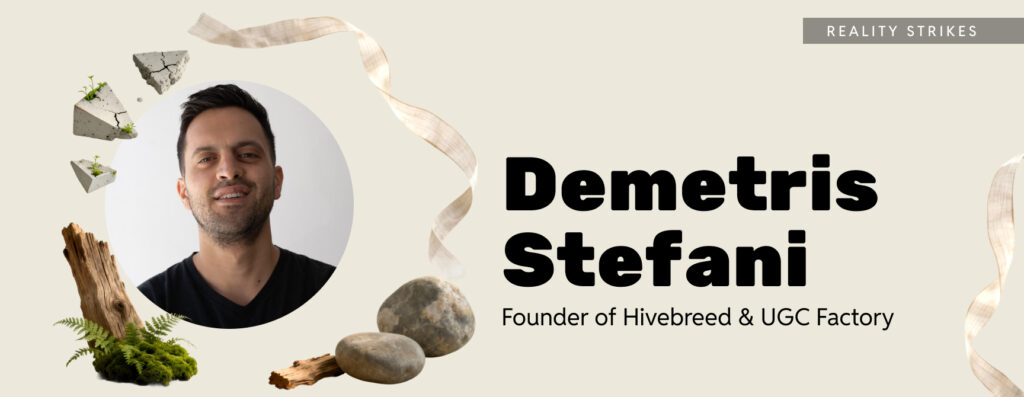
Demetris spoke at length for the report about the shift from the perfect persuasion to people-led storytelling. His reflection paints a clear picture of why vulnerability and imperfection have become such powerful growth means for brands, and it aligns directly with what we’re seeing across design and marketing today.
“We’ve moved from polished digital advertising to an amplified version of traditional media online. Consumers no longer respond to anything that feels like an ad. People trust people. Honest feedback, raw experiences, creator-led stories bypass the defense mechanisms consumers have built up.
For years, brands tried to hide flaws. But imperfection is what makes a brand feel real, relatable, human. It creates a safe playground to experiment and build emotional connection without the pressure of being flawlessly “on-brand”. When people feel they’re seeing the truth behind the message, trust accelerates.
Raw content may seem cheaper from the outside, but in practice it demands a sharper strategy. Balancing authenticity with brand goals isn’t easy. Through UGC Factory, we’ve seen everyday creators in Cyprus and Greece craft more impactful stories than highly curated campaigns, simply by sharing genuine experiences.
When it comes to leadership, vulnerability isn’t about emotional dumping—it’s about clarity. It’s the confidence to say ‘I don’t know’ while offering direction. When leaders open conversations instead of performing certainty, teams relax, creativity expands, and trust deepens.
My advice? Keep the mistakes in the flow. Be open to experimenting. If it doesn’t feel like an ad, it’s potent.”
— Demetris Stefani, Founder of Hivebreed & UGC Factory
In 2026, the most relevant and resonant brands are the ones opening their doors and letting people in. For example, Oatly’s disarmingly honest communication and packaging. Imperfect on purpose, self-aware in tone, and refreshingly direct.
Adina Cirstea
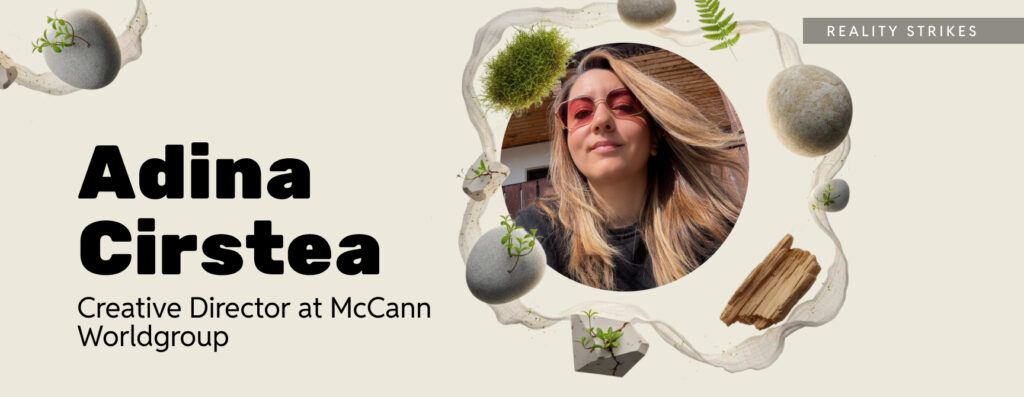
Adina’s commentary for the report touched on emotional honesty—how truth has become a timeless creative device, and why imperfect storytelling matters now more than ever. It reinforced our own research and data, convincing us yet again that 2026 will be a year defined by a more humanistic approach to design and marketing communications rather than a pixel-perfect mindset.
“Emotional honesty is one of the most powerful tools creatives have right now. We live in a moment when it’s hard to tell what’s made by AI and what’s made by humans, and the only thing that reliably cuts through that uncertainty is truth.
AI can’t grasp the little quirks and contradictions that make us human, which is why it’s our job to guide it toward imperfection. Look at IKEA’s Proudly Second Best or Guilty Pets campaigns. Or Tinder’s print ads with the fire in the middle of the room and old photos of boyfriends and girlfriends burning in it. No headline. No copy. Just the logo. Only a feeling that you instantly recognize and that stays with you.
I always say: if an insight works in print, it will work anywhere: film, digital, you name it. Print forces clarity and truth. And it’s not just for iconic brands. Even the dullest product becomes powerful when you build the story on something human.
We’re not wired only for positivity or fake praise. When’s the last time ChatGPT told you that you were doing a bad job? Vulnerability isn’t pessimism. It’s honesty. We don’t need over-the-top praise. We need truth and real conversation. That’s where emotional honesty begins.
Many brands are stepping away from hyper-curated perfection and choosing raw authenticity instead. They understand that honesty connects more deeply, and that flaws and vulnerability are what build trust between people, and between brands and audiences.
Over-polished perfection won’t last. People don’t just want to be impressed; they want to feel. You can already see it: the new generation turning off screens and turning back to one another. Because in the end, what stays with us isn’t what looked perfect; it’s what felt true. And that’s where creativity needs to go next: back to being human.”
— Adina Cirstea, Creative Director at McCann Worldgroup
As we showed in the report, brands like Garnier are already embracing this shift and sharing raw product sketches that reveal process, imperfection, and intent. It might look like a small gesture, but it’s a powerful signal of the honesty audiences now expect from the brands they choose.
Ruben van Eijk
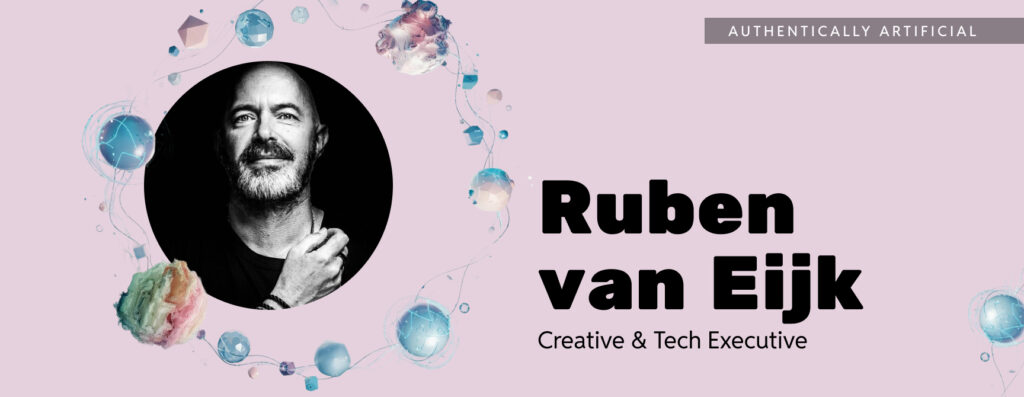
Ruben’s perspective helped us articulate one of the most important shifts of 2026: creativity is no more limited with choosing between human craft and machine capability, but about learning how they shape one another. His insights reinforced what our own analysis suggested—that human intention remains the core and AI acts as an expansion tool rather than a replacement.
“Authenticity used to mean ‘made entirely by humans.’ Today, it means ‘made with intention.’ AI doesn’t erase the human. It reveals the human.
When I use AI, I’m forced to articulate what I feel, not just what I know how to produce manually. My intuition becomes the brief. The machine becomes the amplifier. The soul stays human; the execution becomes augmented.
In teams, this shift is changing everything. We’re moving from craft execution to concept orchestration. Traditional roles were linear. Semi-generation makes them circular. The best teams aren’t the ones with the best prompts, they’re the ones with the strongest point of view. Authorship shifts from button pressing to direction setting.
The aesthetics emerging from this are fascinating: hyper-designed, yet imperfect on purpose. Key signatures:
- Human-anchored stories expanded by AI. Real footage or photography becomes the seed as AI expands the world around it.
- Modular storytelling. Instead of one master asset, creators build systems that ignite infinite variations instead of single outputs.
- Emotional surrealism. Not absurd for absurdity’s sake, but the ‘mundane’ with a subtle twist that feels meaningful.
Emotion won’t come from tools. Emotion will come from choices. It will start with the “why?” instead of a prompt. We’ll use AI for volume and use humans for judgment. We’ll keep the imperfections that algorithms try to sand away. Emotion will live in the human narrative, not in the pixels.
I feel the role of creative leadership will evolve from crafting outputs to crafting conditions for ingenuity. The leaders who succeed won’t be the ones who know the most tools—they’ll be the ones who build a culture where the team feels safe to experiment, fail, and try again, at scale and with speed.”
— Ruben van Eijk, Creative & Tech Executive
This shift toward hybrid authorship is accelerating quickly. The time from idea to licensed visuals is shrinking, thanks to tools like the AI Image Generator and AI Image Editor, which support faster, more flexible execution while keeping creative intention at the center.
Explore Design Trends 2026
Alexandra Zeevalkink
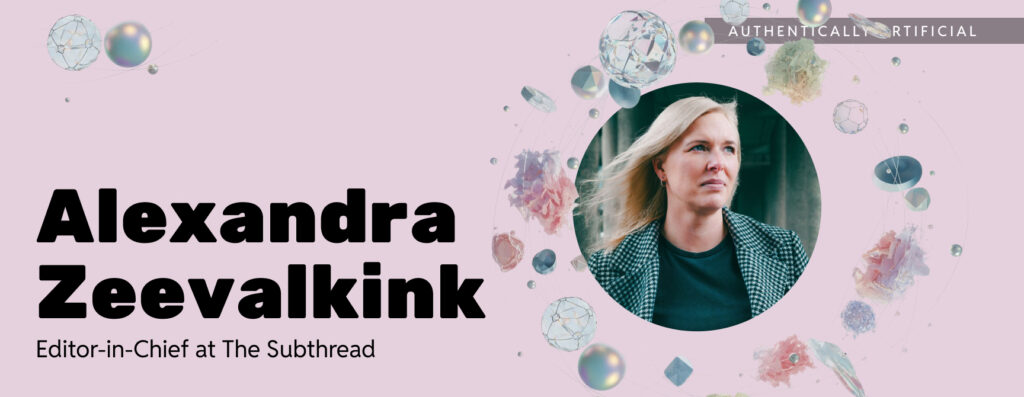
Alex’s perspective helped us broaden the lens on semi-generated aesthetics and understand what truly defines authenticity in AI-shaped visuals. Creativity is now about designing a workflow where algorithmic precision and human individuality can coexist meaningfully. Her insights echoed what we observed: audiences are gravitating toward visuals that feel intentional, culturally aware, and emotionally grounded, even when AI plays a major role behind the scenes.
“AI isn’t replacing creativity, but it’s changing many job descriptions. Authentic used to mean ‘made by hand.’ Now it looks more like ‘made with judgment.’ Our role is to create intent, taste, and context. The machine’s role is scale, variation, and speed. The best work still feels human, even if it was conceived with the repetitive craft and power of AI models.
Inside creative teams, it’s likely we keep the core—as said, we need the story and taste—but we surround it with new roles and responsibilities, like prompt director, dataset wrangler, and provenance editor. Collaboration will mean more systems such as shared prompt libraries, reusable pipelines, and a lightweight testing mechanism for ideas. The team’s output can drastically increase this way. Most importantly, we should think of making the origins of work visible to our audience. Notes on how something was made could become part of the design language, which strengthens trust even if the work is clearly co-produced.
Visually, I would expect to see more realistic images and motion with lived-in imperfections, such as believable light and natural timing—movements, cuts, and transitions that feel like real life. It’s all about realism anchored in creative storytelling. Fun is very much allowed. Vanilla is no longer accepted.
We’ll likely see more of a few things over the next two years: localisation that respects culture because humans conceive the idea and sign it off; metadata used as a graphic element, signalling care; and what you could call grounded imagination—a hit of realism with a decisive twist.
Because we are openly co-working with machines and each other, we will see that semi-generated content shows more lived insight and doesn’t just come from good style prompts. We can use relevant datasets tied to our audience and add asymmetry—the beautiful details of human life—imperfect crops, pauses, ambient texture. The test is whether someone senses a person, not just a machine, made considered choices for them.”
— Alex Zeevalkink, Editor-in-Chief at The Subthread
The trend is already playing out across the industry. Platforms like Zalando are generating digital model twins to accelerate campaigns and expand creative possibilities, while designers increasingly blend algorithms with human direction to scale production without sacrificing quality. This hybrid approach continues to define how semi-generated aesthetics evolve—intentional, efficient, and human at their core.
Peter-Jan Grech
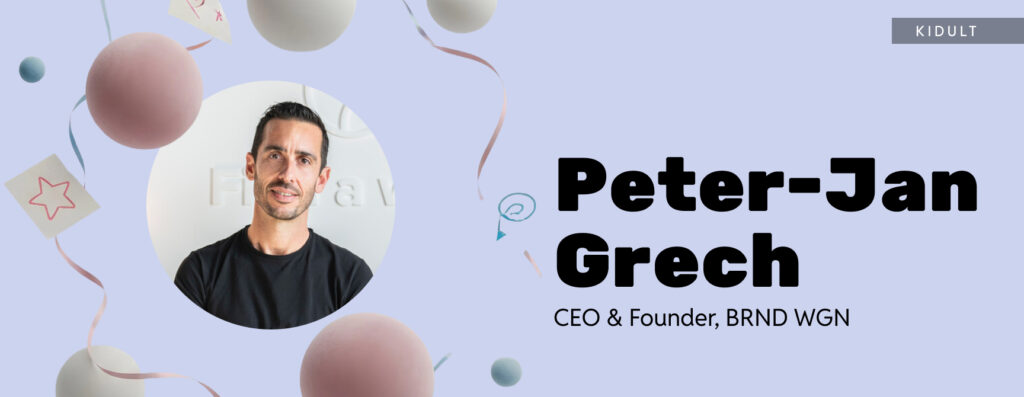
Conversation with Peter-Jan helped us better understand why play in 2026 is not just a stylistic choice but a cultural correction—a counterweight to years of collective anxiety and overstimulation. His insights echoed what we saw across search data, brand case studies, and behavioral shifts. Next year people will increasingly seek lightness, connection, and shared joy. Brands that embrace these emotional cues will build deeper, lasting trust.
“Play is here to stay.
Three forces are reshaping 2026. People are tired of being worried. People are tired of regimes and extremes. People are getting tired of over-dependence on tech. Together, these forces push brands back to human connection, where play fuels positivity, belonging, and community.
People are tired of being worried. Post-pandemic, wars and conflicts have weighed people down for far too long, and they want to go back to worry-free days.
People are tired of listening to all the latest regimes and self-made gurus: ice baths, fasting, infrared, high-protein diets — all of this is so last week. The movement now is to embrace balance and ‘do what feels right.’
AI lacks personality. Besides the imminent AI stock crash, over-dependence on digital relationships and GenAI responses has made people want to reignite their human relationships.
Even though the realities are sombre, people want to be distracted by play, giving rise to the ‘Return to Human.’ Play is human nature, and it drives positive energy, especially in community. We are seeing a rise in run clubs, festivals, and gatherings that encourage more genuine connections forged through emotional and physical experiences. All of this is why ‘Play is here to stay.’
The brands that are winning are filling this void through both design and experience.
Nostalgia reminds us of worry-free, conflict-free, balanced times when people gathered over a deck of cards, a game of football, or even a game of tennis (today, padel).
People want to feel alive together again.
Why play works, even in serious categories.
After years of sustained anxiety, play is a pressure release that signals confidence and care. It makes complex things feel human without reducing rigour, which builds trust faster in high-stakes journeys.How ‘grown-up play’ will shape creative direction.
Motion will shift from spectacle to reassurance: natural easing, cause-and-effect feedback, and quiet micro-celebrations at moments of progress. UX will prefer warm, clear microcopy. Storytelling will move from broadcast to hosted experiences that people complete together. This will become more evident through the growth of personal brands — founders leading content, raw documentary-style content, and playful behind-the-scenes.Visual cues that convey curiosity.
Tactile type and variable weights. Soft geometry and rounded edges. Rhythmic asymmetry in grids. Subtle overshoot and bounce on action states. A disciplined palette with small sparks of optimism. The feel is approachable, not childish.Using nostalgia without imitation.
Lead with the emotion, not the artefact. Pair a true memory with a modern behaviour: retro texture with responsive layouts, familiar sounds with new interactions. If the idea stands when you strip the retro styling, it is fresh rather than derivative.Humour, surprise, and credibility.
Humour shortens distance, and surprise resets attention. Sequence matters: truth first, twist second. Keep levity in low-risk moments and sobriety where money, health, or safety are in play.”
— Peter-Jan Grech, CEO & Founder, BRND WGN
Brands are already applying these ideas. From digital storytelling to collectible product packaging and gamified mechanics, playful design gives audiences small moments of delight. Moments that lower barriers, humanize the brand, and create the kind of emotional connection people are actively seeking in 2026.
Explore Design Trends 2026
Patrick Horan
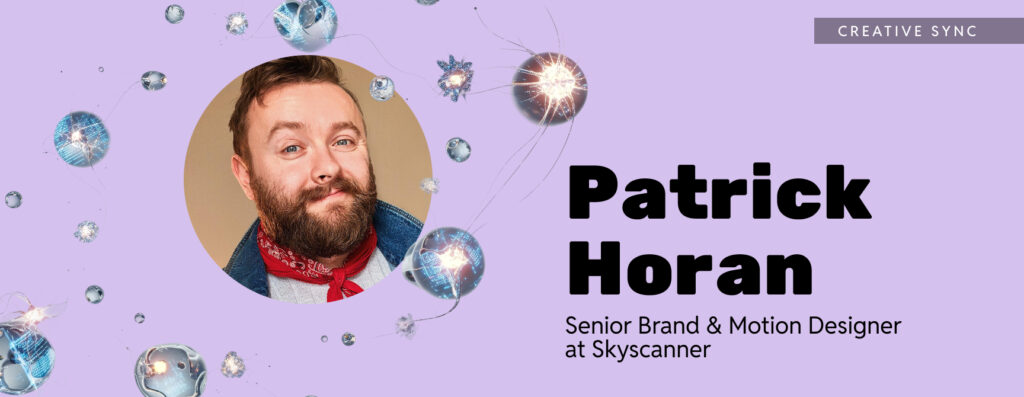
Patrick’s perspective added depth to our report, highlighting why it’s not about faster workflows these days, but about smarter, better-balanced ones. Creative teams are searching for systems that reduce friction without diluting imagination—structures that protect creative flow while making room for autonomy, play, and intuitive decision-making. Patrick’s full interview reveals how technology, when used intentionally, becomes a great partner in creativity.
“Creative ecosystems are moving at lightning speed, and we’re already seeing our team adapt to these new workflows. Platforms like Slack and Zoom are using AI to summarise channels and filter out noise so creatives can have more focused time to design, make, and ideate—something we’ll see even more of in 2026.
Creative teams will continue minimising tedious admin work to smooth out production, especially on large-scale projects. As we move into the delivery phase, things like file-naming conventions and structured asset organisation become essential to track the hundreds of outputs going into the world.
If I had to choose the most important element of a creative ecosystem from scratch, it would be autonomy. If an ecosystem boxes you in and spits out the same output repeatedly, there’s no ownership—you become a tiny cog in the machine. A great ecosystem is a place where you can play, make mistakes, go back to the drawing board, refine, and even discover unexpected solutions. Creatives don’t want tools that take the joy or humanity out of the work. Tools should reduce tedious tasks and make collaboration easier and more rewarding.
Skyscanner’s ecosystem of brand guidelines, templates, and components gives us strong foundations, but it also empowers everyone to bring their own skills, craft, and ideas to the table.
We use AI as a ‘digital assistant’ to help our designers stay focused on ideas and craft while maintaining momentum behind big campaigns. AI supports concept development—moodboards, scamps, brainstorming—and platforms like Figma and Miro help us collect and collaborate on these ideas before we build scenes from scratch with 3D artists, illustrators, and motion designers. That’s how we dig into the fine details and connect everything back to the product. Our designers’ talents stay at the forefront, and AI plays the supporting role.
To maintain creative intuition while working within structured systems, we’ve built a robust brand world and motion system—but we leave room to evolve it. With our Frontify platform, we cover the basics like colour and logo usage, but we also show the finer details: how material connections work in motion, how local nuance and authenticity guide imagery, and how copywriting can stay playful using our tone of voice.
Spotting trends and taking ownership is important. As we develop our motion system and templates for freelancers or agencies, we constantly think about the range of visual layouts needed to put dynamic edits together quickly. Traveller stories told through kinetic typography, off-the-cuff photography, and dynamic UI moments tied back to the product—that’s where our creative intuition comes alive.
We’re always streamlining the technical side of our roles. AI-powered platforms and plugins help track easing conventions, keyframing, and transitions, which is a great way for motion designers to understand how to keep elements moving in a consistent and dynamic way. It’s not just about making something look good—it’s about showing up consistently across many rapidly changing channels. These are the skills we’re looking for in creatives who want to thrive in a system-led environment.
An effective creative ecosystem doesn’t try to do everything at once. Multiple ecosystems that link seamlessly allow creatives to fine-tune workflows in ways that suit their needs. Some platforms claim they can do everything through AI or simplify design by removing important aspects of craft and design thinking—but tools like Slack, Figma, and Miro succeed because they evolve alongside their users. One major pitfall is systems that scale quickly but offer no flexibility, leaving designers without the fine-tuning tools they need to create polished and effective assets.”
— Patrick Horan, Senior Brand & Motion Designer at Skyscanner
Indeed, today’s most effective ecosystems honour both speed and soul. They blend automation with artistry, helping teams work rapidly without sacrificing nuance or emotional intelligence. This balanced workflow is reinforced by platforms like DepositPhotos, where licensed content, AI-powered search, generative tools, and curated design resources come together, enabling creatives to move fluidly from idea to execution without breaking their stride.
Final thoughts from our team to take with you into 2026
If there’s one lesson this year teaches us, it’s that creativity grows best where honesty, softness, and courage meet.
In 2026, creativity doesn’t call for louder voices. It encourages brands to show presence and care rather than performance. It nudges creatives to embrace new tools while staying grounded in their own vision. And above all, it reminds us that behind every asset, every frame, every campaign, there is a human being hoping to connect with another human being.
May your work this year be intentional. May your storytelling be generous. May your creativity remain a place where clarity, care, and imagination coexist—softly rebellious, beautifully human, and unmistakably yours!
Explore Design Trends 2026

![Graphic Design Trends 2021 [Infographic]](https://depositphotos-blog.s3.eu-west-1.amazonaws.com/uploads/2021/02/Graphic-Design-Trends-2021-Infographic-1.webp)